Ring Topology: How It Works, Advantages, Disadvantages and Examples
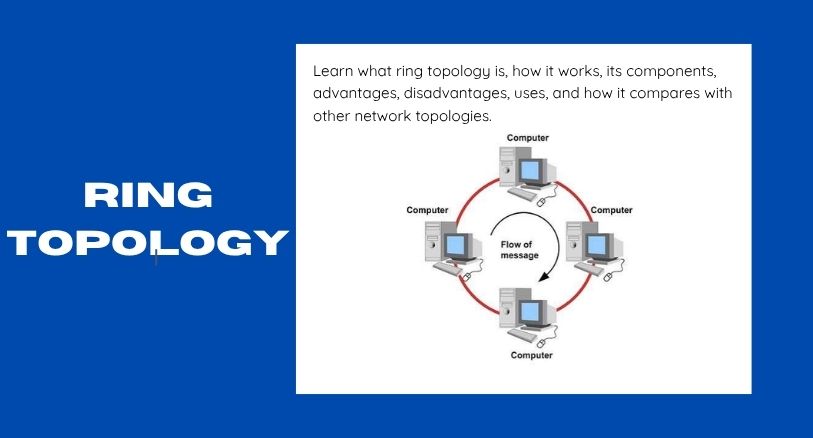
Ring topology is a network topology in which each device is connected to two other devices, forming a closed circular path. Data travels from one device to another around the ring until it reaches its intended destination.
Unlike star topology, a ring network does not normally depend on one central switch for the basic topology. Each device acts as part of the communication path.
The name comes from the physical or logical arrangement of the connected devices. When represented as a diagram, the devices form a circle or ring.
Ring topology was used in several older networking technologies. Although it is less common in modern Ethernet LANs, it remains an important concept for understanding how different network topologies handle data transmission.
How Does Ring Topology Work?
In a ring topology, every device has connections to two neighboring devices.
For example, imagine five computers arranged in a circle. Computer A connects to Computer B, Computer B connects to Computer C, and so on. The final computer connects back to Computer A, completing the ring.
When one device sends data, the information moves through the ring from one device to another.
Depending on the implementation, data may travel in one direction or in both directions.
In a traditional single-ring design, data typically follows one direction around the network. Each device examines the data as it passes through. If the data is not intended for that device, it forwards the information to the next device.
When the data reaches its destination, the receiving device processes it.
Main Components of Ring Topology
A ring network contains several important components.
Network Devices
Computers, servers, printers, or other network devices can participate in a ring network.
Each device needs the appropriate network interface to communicate with its neighboring devices.
Network Connections
Each device connects to two neighboring devices. These connections form the complete circular communication path.
Transmission Medium
The network may use cables or another suitable transmission medium to connect the devices.
The specific medium depends on the networking technology being used.
Network Interface
Each participating device requires a network interface that can send and receive network data.
The interface allows the device to communicate with the other devices in the ring.
Example of Ring Topology
Imagine six computers connected in a circular arrangement.
Computer A connects to B, B connects to C, C connects to D, D connects to E, E connects to F, and F connects back to A.
If Computer A sends information to Computer D, the data travels through the connected devices until it reaches Computer D.
This illustrates the basic concept of ring topology: every device forms part of a continuous communication path.
Types of Ring Topology
Ring topology can be implemented in different ways depending on how data moves through the network.
Single Ring Topology
In a single-ring network, data travels around one ring.
The communication path is relatively simple, but a failure in one part of the ring can potentially interrupt communication across the network.
Dual Ring Topology
A dual-ring topology uses two separate rings or two paths for communication.
The additional path can provide redundancy. If one direction or path becomes unavailable, communication may be able to continue using the other path.
This makes dual-ring designs more resilient than a basic single ring.
Advantages of Ring Topology
Ring topology offers several potential benefits.
Predictable Data Transmission
Because data follows an organized path, network communication can be relatively predictable.
Some ring-based technologies use controlled access methods to determine which device can transmit.
Reduced Data Collisions
Certain ring networks use token-based communication. A token circulates around the network, and a device must possess the token before transmitting.
This approach can reduce collisions because multiple devices do not transmit freely at the same time.
Equal Access
In token-based ring networks, devices receive opportunities to transmit according to the network’s access mechanism.
This can provide more predictable access than networks where devices compete for a shared medium.
Can Provide Redundancy
A dual-ring implementation can provide an additional communication path.
This can improve reliability when compared with a simple single-ring arrangement.
Disadvantages of Ring Topology
Despite its advantages, ring topology also has important limitations.
A Failure Can Affect Communication
In a traditional single ring, a damaged connection or failed device can interrupt the communication path.
This can affect multiple devices rather than only the device experiencing the failure.
Adding or Removing Devices Can Be Difficult
Changing the ring structure can require modifications to the existing connections.
This makes expansion and maintenance more complicated than in many star-based networks.
Troubleshooting Can Take Time
Because devices are connected as part of a continuous path, identifying a failure can require checking multiple connections or devices.
Limited Modern Use
Traditional ring topology is not as common in modern local area networks as switched star topology.
Modern Ethernet networks generally favor switches because they offer easier management, scalability, and fault isolation.
Ring Topology vs Star Topology
Ring and star topology use different approaches to network communication.
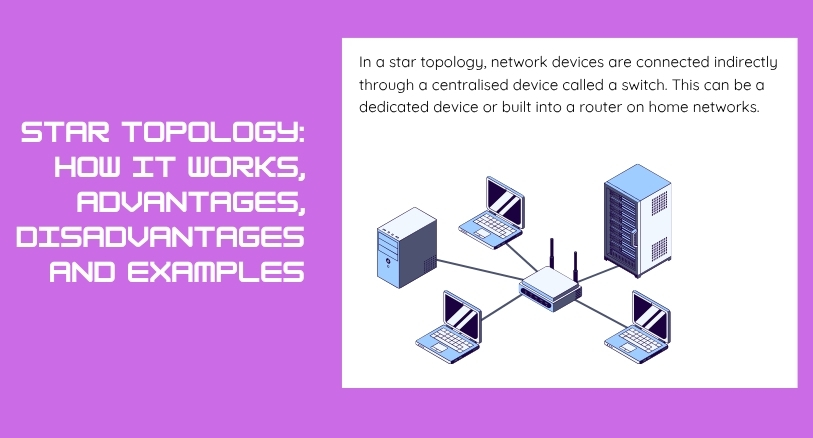
In ring topology, each device connects to two neighboring devices and forms a circular path. In star topology, every device connects to a central networking device.
| Feature | Ring Topology | Star Topology |
|---|---|---|
| Structure | Circular | Centralized |
| Central device | Not required for basic ring | Usually required |
| Device connections | Usually two neighboring connections | Individual connection to central device |
| Fault isolation | More difficult | Easier |
| Expansion | More complicated | Easier |
| Modern LAN usage | Limited | Very common |
Star topology is generally easier to manage in modern LAN environments. Ring topology, however, can provide predictable communication characteristics in systems specifically designed around ring-based networking.
Ring Topology vs Bus Topology
Both ring and bus topology can connect multiple devices without requiring the same centralized structure used by star networks.
However, their communication paths are different.
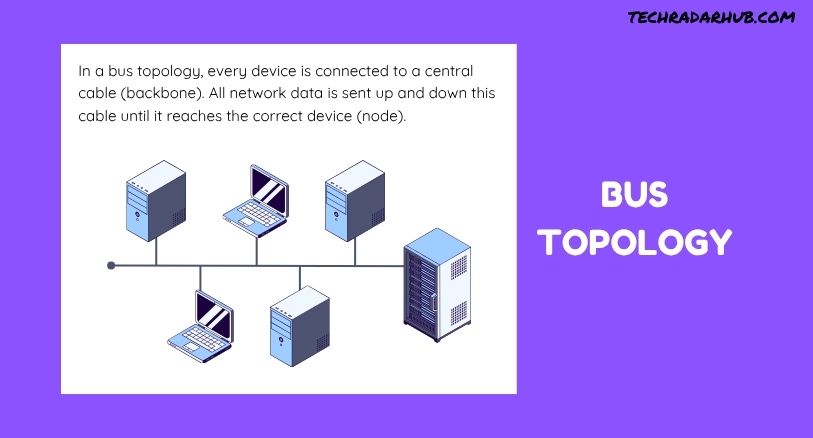
A bus network uses one shared backbone cable. A ring network creates a closed loop in which each device connects to neighboring devices.
In a bus network, a problem with the backbone can affect the entire network. In a traditional ring network, a broken connection can also disrupt the ring unless redundancy or another recovery mechanism is available.
Where Is Ring Topology Used?
Traditional ring topology is less common in everyday LANs today, but ring-based designs have been used in telecommunications, industrial networking, and specialized network infrastructure.
Ring structures can be useful when predictable communication and redundancy are important.
Some modern network technologies also use ring-like logical structures or protection mechanisms, although their implementation can be much more sophisticated than the basic ring topology taught in networking fundamentals.
Ring Topology in Modern Networking
Modern networking has reduced the use of traditional ring topology in ordinary computer LANs.
Ethernet switches and structured cabling have made star and hierarchical star designs more practical for homes, offices, schools, and enterprises.
However, the concepts behind ring networks remain useful. Understanding how information moves between neighboring nodes helps explain network paths, redundancy, fault tolerance, and communication protocols.
Learning ring topology alongside Network Topology Explained also makes it easier to understand why different network designs are chosen for different environments.
Key Characteristics of Ring Topology
| Feature | Ring Topology |
|---|---|
| Structure | Closed loop |
| Central device | Not required |
| Neighbor connections | Usually two per device |
| Data path | Around the ring |
| Collision control | May use token-based methods |
| Fault tolerance | Limited in a single ring |
| Redundancy | Possible with dual-ring designs |
| Expansion | Relatively difficult |
| Modern LAN usage | Limited |
Single Ring vs Dual Ring
The biggest difference between single and dual-ring designs is redundancy.
A single ring has one primary communication path. If a connection breaks, communication around the ring may be interrupted.
A dual ring provides an additional path. Depending on the technology, traffic can use the second ring when the primary path is unavailable.
This makes dual-ring architecture useful in environments where network availability is important.
However, redundancy also increases infrastructure and management requirements.

Post Comment