Mesh Topology: How It Works, Types, Advantages, Disadvantages and Examples
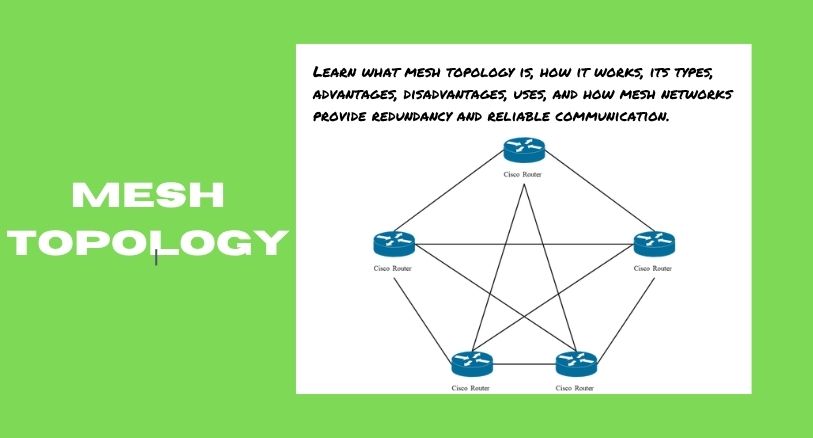
Mesh topology is a network topology in which devices are connected through multiple communication paths. Instead of relying on a single connection or one central device, a mesh network can provide several routes for data to travel between network devices.
The main purpose of mesh topology is to improve reliability, redundancy, and network availability. If one connection fails, another available path may allow communication to continue.
There are two main forms of mesh topology: full mesh and partial mesh. In a full mesh, every device has a direct connection to every other device. In a partial mesh, only selected devices have multiple direct connections.
Mesh topology can require more hardware, cables, and configuration than simpler designs. However, the additional connections can provide strong fault tolerance, making mesh networks useful in environments where network availability is important.
How Does Mesh Topology Work?
In a mesh topology, network devices are connected through multiple links.
When a device needs to send data, the network determines an appropriate path toward the destination. Depending on the network design and routing protocols, data can potentially use different paths.
For example, imagine four routers connected through multiple links. If Router A normally communicates with Router D through Router B, but that connection becomes unavailable, the network may be able to route the traffic through another available path.
This is one of the biggest differences between mesh topology and simpler network structures.
Instead of having only one possible communication path, a mesh can provide alternatives.
Types of Mesh Topology
There are two primary types of mesh topology.
Full Mesh Topology
In a full mesh, every device has a direct connection to every other device.
For example, if a network contains four devices, each device has a direct link to the other three.
This provides a high level of redundancy because there are multiple possible communication paths.
However, the number of required connections increases rapidly as more devices are added. This makes full mesh expensive and difficult to manage for large networks.
Partial Mesh Topology
In a partial mesh, only some devices have direct connections to multiple other devices.
Important devices may have several connections, while less critical devices may have fewer.
This approach provides a balance between redundancy and cost.
Partial mesh designs are often more practical for larger or specialized networks because they provide additional paths where they are most needed without connecting every device to every other device.
Main Components of Mesh Topology
A mesh network can contain several types of networking components.
Network Devices
Routers, switches, computers, wireless devices, and other network nodes can participate in a mesh network.
The exact devices depend on the network’s purpose and architecture.
Communication Links
Links connect the network devices.
A mesh network generally requires more links than simpler topologies because devices need multiple possible communication paths.
Network Interfaces
Devices need appropriate network interfaces to communicate through their connections.
A device with multiple network links may require multiple interfaces depending on the implementation.
Routing Mechanisms
Networks with multiple paths need a way to determine where traffic should travel.
Routing protocols and network configuration can help select available paths and respond to changes in network connectivity.
Example of Mesh Topology
Consider a company with several important network locations.
Instead of connecting each location through only one communication link, the company creates multiple links between key locations.
If one link becomes unavailable because of equipment failure or a damaged connection, traffic can potentially use another route.
This provides greater resilience than a network with only one communication path.
A similar concept can be seen in some wireless mesh networks, where devices or access points can communicate through multiple paths to extend coverage and maintain connectivity.
Advantages of Mesh Topology
Mesh topology provides several important benefits.
High Reliability
One of the biggest advantages of mesh topology is redundancy.
Because multiple communication paths can exist, the failure of one connection does not necessarily disconnect the network.
Excellent Fault Tolerance
A mesh network can continue operating even when some links or devices experience problems, provided alternative paths remain available.
This makes mesh designs valuable for networks where downtime can be costly.
Multiple Communication Paths
Multiple paths give network traffic more routing options.
If the preferred path becomes unavailable, another path may be selected depending on the network’s routing system.
Better Network Availability
Redundancy can improve overall availability.
Critical network infrastructure can use multiple connections to reduce the impact of individual failures.
Easier Fault Isolation
Multiple links can also help administrators identify where connectivity problems are occurring.
Network monitoring and routing information can provide useful information about failed or unavailable paths.
Disadvantages of Mesh Topology
The benefits of mesh topology come with additional complexity.
High Cost
A full mesh requires many connections.
As the number of devices increases, the number of links required can grow quickly. This increases equipment, cabling, installation, and maintenance costs.
Complex Installation
Creating and configuring multiple network connections is more complicated than installing a simple star or bus network.
Network administrators must plan how devices and links will interact.
Difficult Maintenance
More connections mean more components that need to be monitored and maintained.
A large mesh network can therefore require advanced management tools and skilled administrators.
Higher Resource Requirements
Routers and other devices may need additional interfaces and processing resources to support multiple network paths.
Routing also adds configuration and management requirements.
Full Mesh vs Partial Mesh
The main difference between the two types is the number of direct connections.
| Feature | Full Mesh | Partial Mesh |
|---|---|---|
| Direct connections | Every device connects to every other device | Selected devices have multiple connections |
| Redundancy | Very high | High |
| Cost | Very high | Lower |
| Complexity | High | Moderate to high |
| Scalability | Limited | Better |
| Typical use | Highly critical networks | Practical large or specialized networks |
Full mesh provides maximum connectivity, but partial mesh is often more practical when cost and scalability matter.
Mesh Topology vs Star Topology
Star and mesh topology approach network reliability differently.
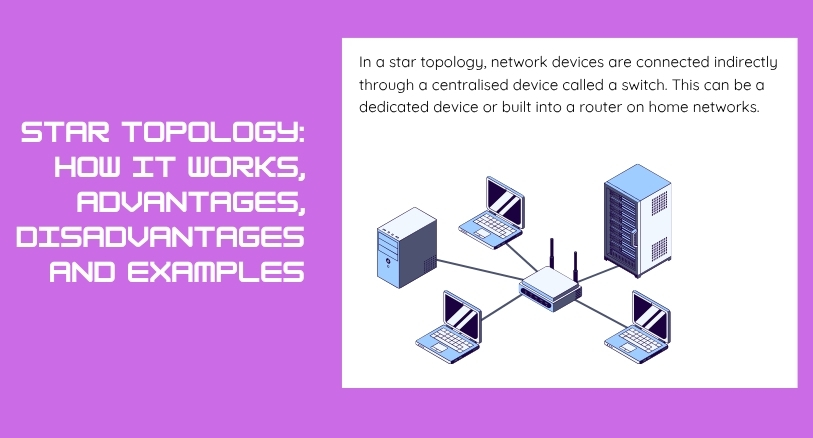
In a star topology, devices connect to a central switch. The central device simplifies management and makes expansion relatively easy.
In a mesh topology, devices have multiple communication paths. This provides greater redundancy but also increases complexity and cost.
For example, if one computer’s connection fails in a typical star network, that computer may lose connectivity while other devices continue operating. In a mesh network, alternative links may allow traffic to continue through another route.
Mesh Topology vs Ring Topology
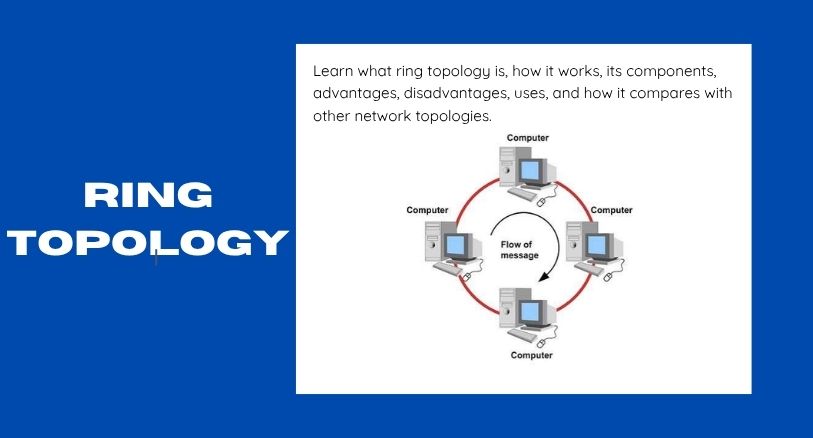
Ring topology connects devices in a circular path, while mesh topology can provide multiple paths between devices.
A single ring can be vulnerable to a connection failure because breaking one part of the ring may disrupt the communication path.
A mesh network is designed around redundancy. Multiple links can provide alternative routes when one connection fails.
This makes mesh topology particularly useful when reliability is a major requirement.
Where Is Mesh Topology Used?
Mesh topology can be used in several environments where reliable connectivity is important.
Common examples include:
- Wireless mesh networks
- Telecommunications networks
- Enterprise network infrastructure
- Data center networks
- Industrial networks
- Critical infrastructure
- Large-scale routing environments
Wireless mesh networks are especially interesting because nodes can communicate with one another and help extend network coverage.
For example, several wireless access points can form a mesh, allowing traffic to move between nodes without requiring every access point to have a direct wired connection to the main network.
Why Is Mesh Topology Reliable?
The reliability of mesh topology comes from redundancy.
Consider two networks. The first has only one communication path between two locations. If that path fails, communication stops.
The second network has several possible paths. If one path fails, routing mechanisms can potentially move traffic through another available route.
This does not mean every mesh network is immune to failure. Multiple devices or links can still fail at the same time. However, redundancy significantly reduces dependence on a single communication path.
Key Characteristics of Mesh Topology
| Feature | Mesh Topology |
|---|---|
| Main structure | Multiple interconnected paths |
| Central device | Not necessarily required |
| Redundancy | High |
| Fault tolerance | High |
| Installation | Complex |
| Cost | Relatively high |
| Scalability | Depends on implementation |
| Maintenance | More demanding |
| Modern usage | Specialized and widespread in certain network designs |
When Should You Use Mesh Topology?
Mesh topology is most useful when reliability and redundancy are more important than minimizing infrastructure costs.
For example, a critical network may need to remain operational even if a communication link fails. A mesh design can provide alternative routes to help maintain connectivity.
However, a small office with a few computers may not need the complexity of a full mesh. A switched star topology can usually provide a simpler and more cost-effective solution.
Therefore, network designers should consider factors such as cost, scalability, availability, performance, and fault tolerance before selecting a topology.
FAQ’s
What is mesh topology?
Mesh topology is a network structure where devices have multiple communication links, creating several possible paths for data transmission.
What are the two types of mesh topology?
The two main types are full mesh and partial mesh topology.
What is full mesh topology?
Full mesh topology connects every device directly to every other device, providing maximum connectivity and redundancy.
What is partial mesh topology?
Partial mesh topology connects selected devices through multiple links while other devices have fewer connections.
What is the main advantage of mesh topology?
The main advantage is high redundancy. Multiple communication paths can allow traffic to continue when one link fails.

Post Comment